The Mohs Scale for Jewelry Makers:
Stone Hardness, Durability & Setting Tips
1. TLDR: The Maker’s Overview
The Mohs Scale helps jewelry makers understand how hard a stone is. It is a relative scale that measures stones' hardness against each other. Jewellers use it to understand what stone may or may not be suitable for different jewelry projects.
Softer stones like Amber, Opal and Turquoise require more skill and forethought while harder stones like Quartz, Agate, and Obsidian can be great for practicing beginner bezel making skills.
2. Quick Facts

3. What Is the Mohs Scale of Hardness?
Created by Friedrich Mohs in 1812, this scale is a simple "scratch test" that compares which mineral can scratch another. Think of it as a quick durability guide for your bench:
- A Diamond (10) can scratch a Sapphire (9).
- Quartz (7) can scratch Glass (5.5).
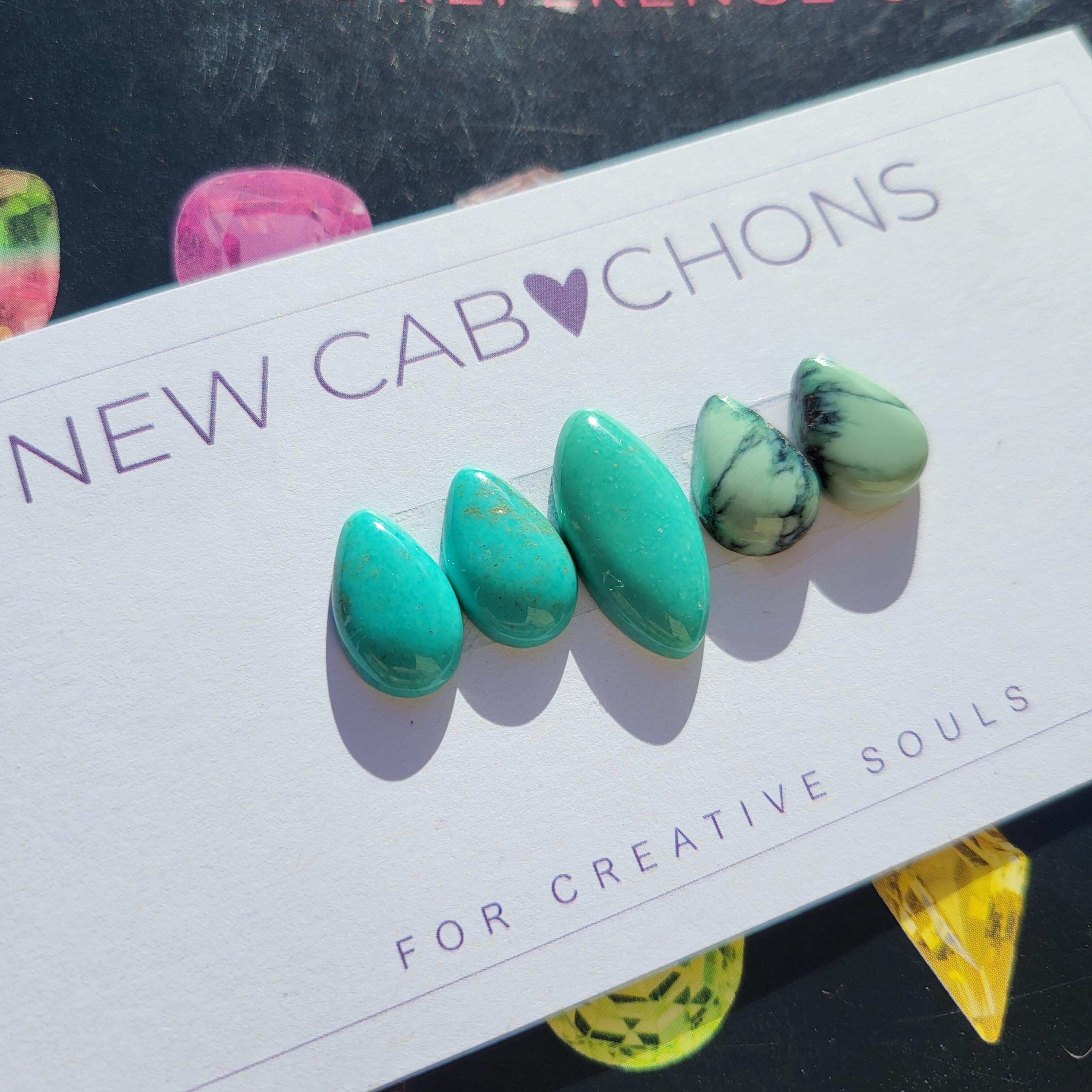
- Turquoise (5) can be scratched by a steel file or even a copper penny.
Gemstones below Mohs 7 are more likely to develop tiny scratches and lose some polish with regular wear. Softer stones can still be beautiful, but they usually need more protective settings.
4. Why Mohs Hardness Matters for Jewelry Design
Hardness determines the lifestyle of the finished piece. Consider where your clients will wear the jewelry:
Rings & Bracelets (High-Impact Zone): Hardness matters most here. Stones in the 4.5+ range are usually the safest choice for everyday rings, like quartz, obsidian, turquoise, ryolite cantera opal, geodes pairs and more.
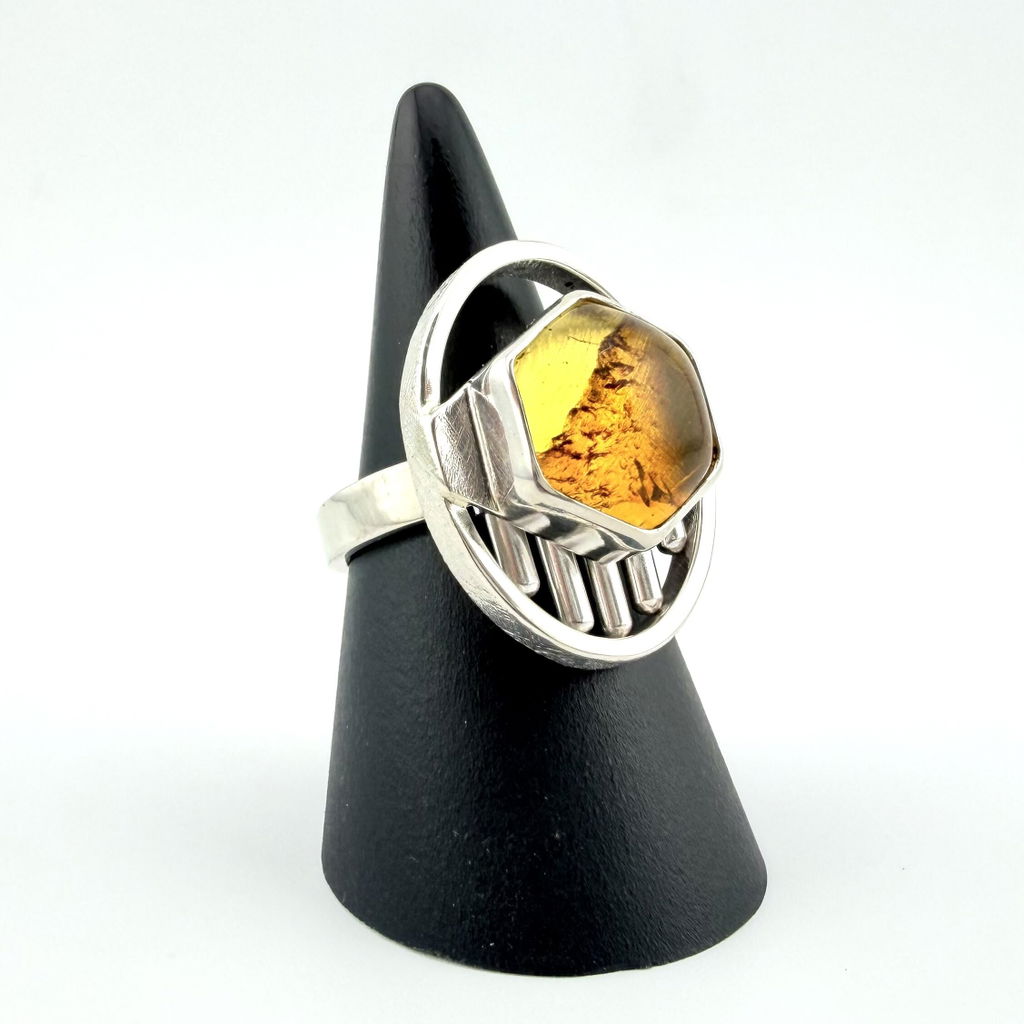
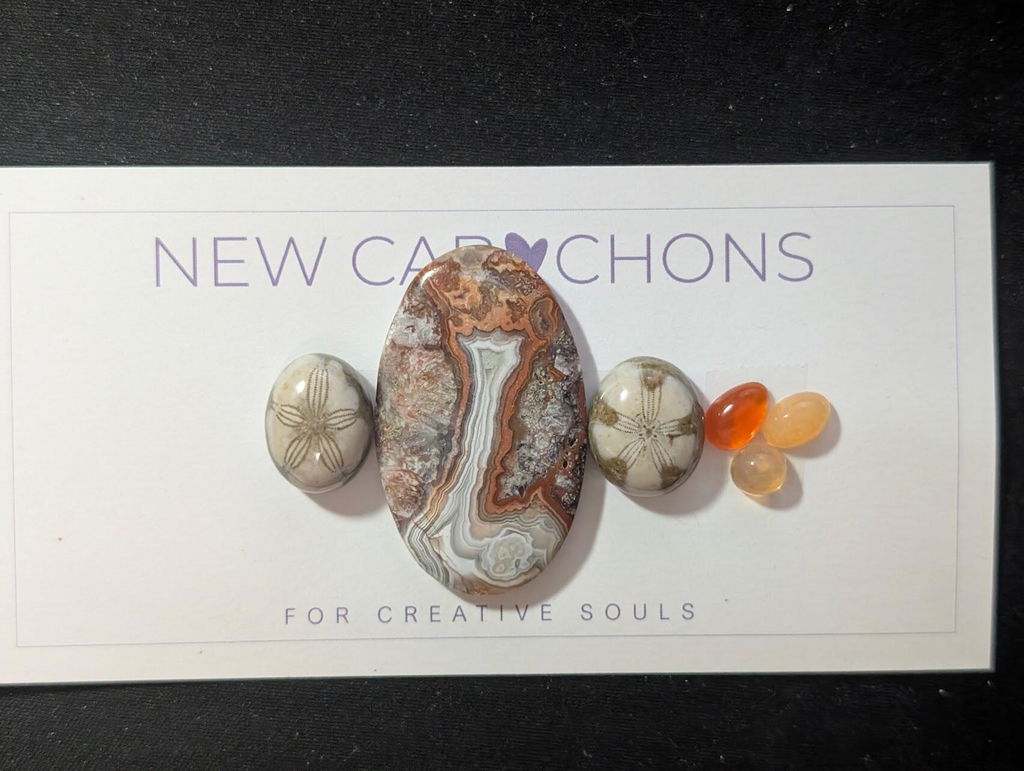
While lower-hardness stones, like amber and sand dollar fossils can still work but may benefit from a protected bezel to shield the stone from side impacts. These materials are very attractive and may be used more as “cocktail” rings than everyday staples.
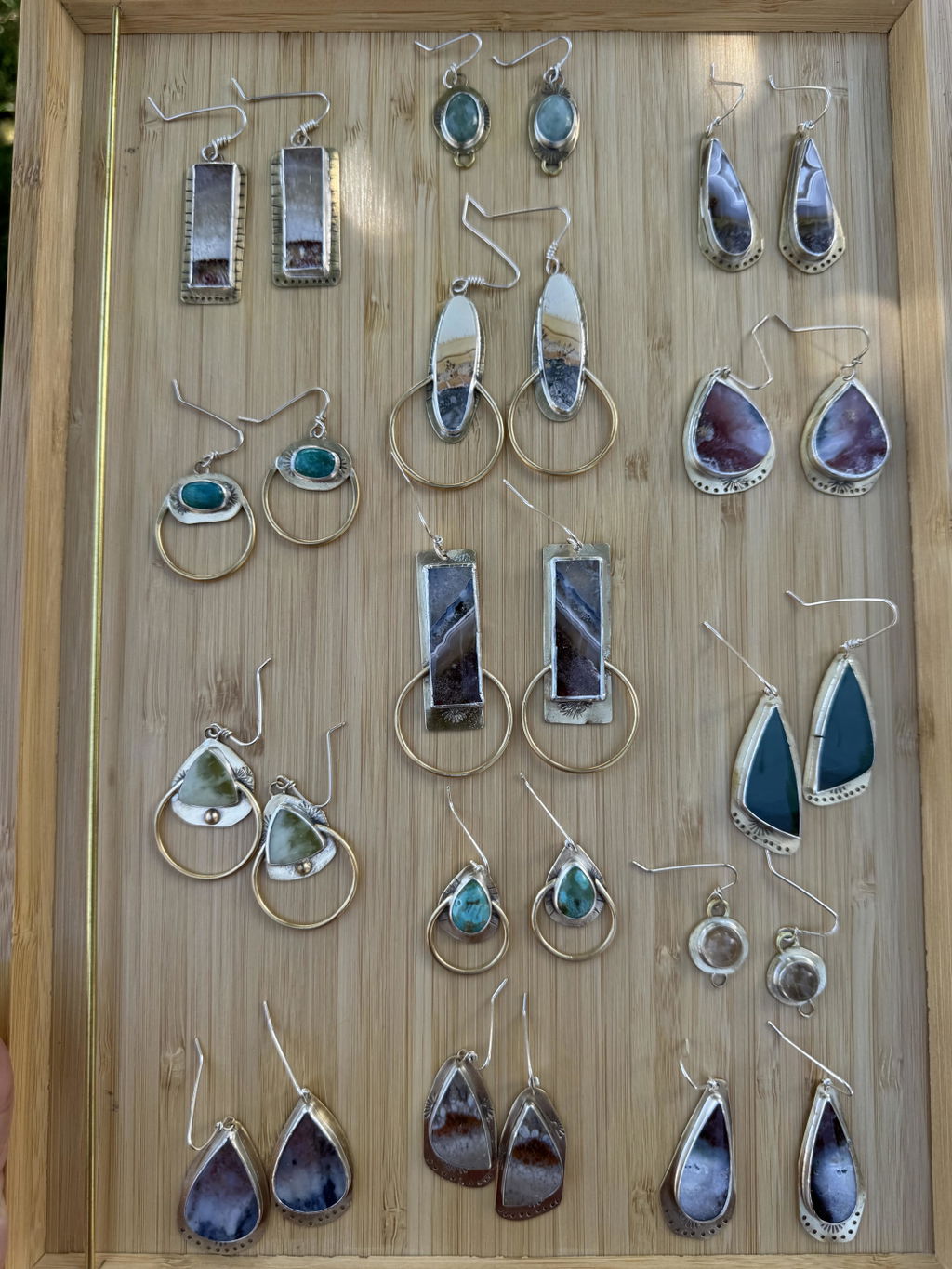
Pendants & Earrings (Safe Zone): These pieces rarely hit hard surfaces, so you can explore softer stones here.
5. Mohs Scale Guide for Popular Jewelry Stones

6. Hardness vs. Toughness
Hardness and toughness are NOT the same thing, and confusing them is one of the most common mistakes in jewelry making.
- Hardness means a stone resists scratching
- Toughness means it resists chipping, breaking, and impact.
This distinction matters because a gemstone like diamond is incredibly hard to scratch, but if you hit it with a hammer at the right angle, it will shatter (low toughness). On the other hand, a stone like Jade is relatively soft (6.5), but its internal structure is so fibrous and intertwined that it is nearly impossible to break.
Obsidian is another useful example: it can be relatively scratch-resistant for some uses, but it breaks more easily than tougher stones.
7. The Best Stones for Your Project
Use this as a quick reference when selecting materials for your next collection:
- Best for Everyday Rings: Quartz, geode agates, obsidian, turquoise, and cantera opal.
- Best for Pendants & Statement Pieces: Amber and sand dollar fossils.
8. How to Protect Softer Stones (Silversmithing Tips)
You don’t need to avoid softer stones. You just need to design with intention, following these tips:
- Create Full Bezels: A rim all the way around the stone will protects the edges, and prevent damage
- Recessed Settings: Seat the stone deeper into the metal so the silver takes the hit, not the gem.
- Avoid Prongs: Prongs provide "point pressure" which can crack soft or brittle stones during the setting process.
- Say No to Ultrasonic: Never put stones below a 7 in an ultrasonic cleaner. The vibrations and heat can expand internal inclusions and cause cracks.
- Share “care tips” with your clients: like to not swim or shower while wearing gemstone jewelry and do not expose the stones to prolonged heat and sun. This is a great way to add value and build trust.
Switch to Fine Silver: While sterling silver (925) is standard for bezels, it can be quite stiff. For stones like Amber or Chrysocolla, use Fine Silver (.999) bezel wire. It is much softer and requires significantly less pressure to burnish over the edges of a delicate stone, reducing the risk of a "slip" or a crack.
The Dental Floss Trick: To avoid a soft stone getting "stuck" in a bezel during a dry fit, lay a piece of dental floss across the bezel cup before test-fitting the stone. You can simply pull the floss to lift the stone out safely, scratch free!
9. FAQ: Durability & Wear
Ideally 4 or higher, though softer stones can still work in protective settings and can be used as special occasion use “cocktail” rings.
Yes, but it is porous. Avoid wearing Turquoise while doing dishes, swimming, or applying lotions, as these can change the stone’s color and degrade its surface.
Absolutely. Quartz (including Geode Agates) resist the wear and tear of daily life beautifully.
Very soft stones like Amber, which is technically a resin, are best for gentle wear.
Mohs hardness measures how resistant a gemstone is to scratching. It does not measure toughness or resistance to breaking.